These are the questions contractors and homeowners ask us most often. Each answer links to a longer guide if you need the detail.
Which sealant should I use?
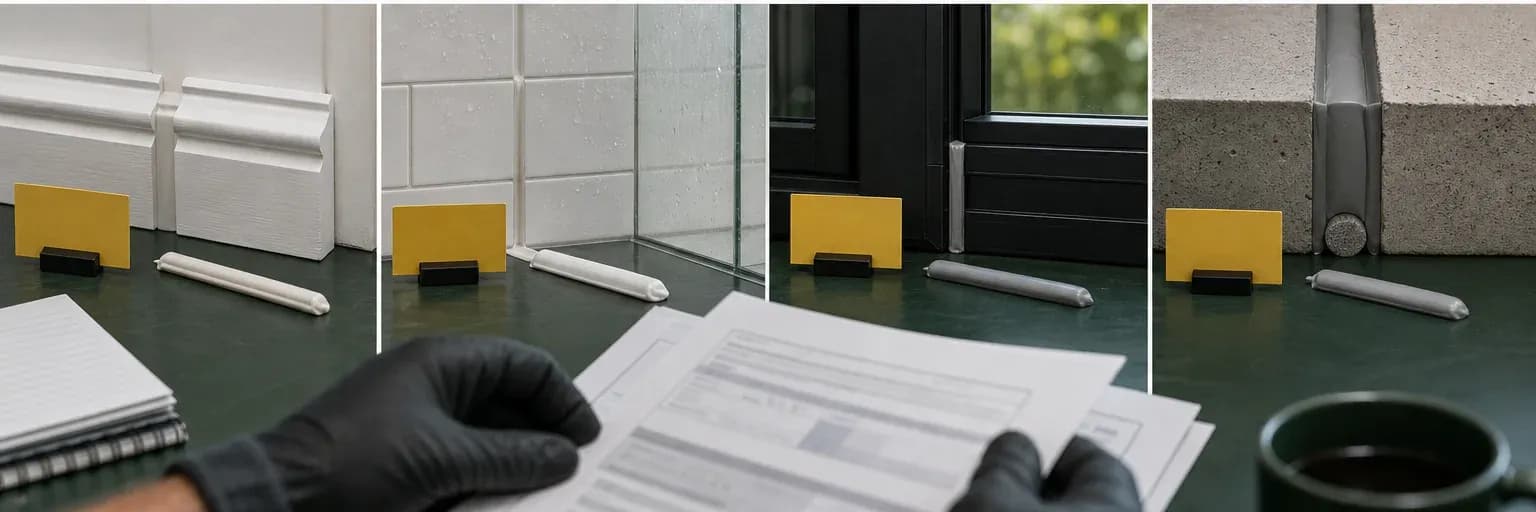
Start with the two surfaces and what the joint has to do. In our range:
- Bathrooms and kitchens: Pereseal AF, a neutral-cure anti-fungal silicone.
- Exterior joints, windows, concrete, stone and metal: Pereseal N, a neutral-cure weatherproof silicone.
- Glass and metal glazing: Pereseal 802, an acetoxy silicone certified to ASTM C920 Class 25.
- General sealing on glass, ceramic and other non-porous surfaces: Pereseal MP.
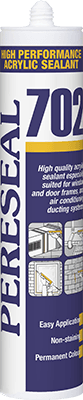
- Interior gaps you want to paint: Pereseal 702 acrylic.
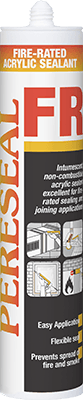
- Fire-rated joints: Pereseal FR, an intumescent acrylic.
See acrylic vs silicone if you're unsure which family you need.
Can I paint over silicone?
No. Paint won't bond to cured silicone and will peel or bead up. If the joint needs paint, use an acrylic such as Pereseal 702 or, in fire-rated work, Pereseal FR. More in can you paint over sealant.
Is acrylic sealant waterproof?
Once dry, 702 is weather-resistant and handles rain on an exterior joint. It needs 24 hours before it gets wet, and it isn't for joints that sit in water. For showers, baths and sinks, use silicone.
What's the difference between neutral-cure and acetoxy silicone?
Acetoxy silicone releases acetic acid as it cures. That's the vinegar smell. The acid can attack some metals, such as copper and lead, and it isn't for natural stone or uPVC. Neutral-cure silicone doesn't release acid, smells much less and suits a wider range of surfaces. MP and 802 are acetoxy; AF and N are neutral cure. Full comparison: neutral-cure vs acetoxy.
Does anti-fungal silicone stop mould for good?
No. The fungicide in AF stops mould growing in the sealant itself. It can't stop mould growing on soap film sitting on top, or in water trapped behind a lifted edge. Ventilation and drying the joint after use matter as much as the sealant. See why bathroom silicone turns black.
Can I put new silicone over old silicone?
Don't. Fresh silicone doesn't bond reliably to cured silicone, and a second layer traps whatever caused the first one to fail. Cut the old bead out, clean the joint and start again. Our bathroom resealing guide takes you through it.
How long before I can use the joint?
AF, N and 802 are tack-free in about 15 minutes and cure about 10 mm deep in 7 days. Acrylics need 24 hours before water. Details for each product are in how long does sealant take to cure.
Do I need backer rod?
In a movement joint, yes, whenever the gap is deeper than the bead should be. Backer rod sets the depth and stops the sealant sticking to the back of the joint, so it can stretch between the two sides. You don't need it for a shallow gap along a skirting board. See when to use backer rod.
Do I need a primer?
Rarely with our range. 702 and FR need no primer on aluminium and most porous building materials. AF, N and 802 bond without primer to most materials, and MP needs none on non-porous surfaces. On an unusual plastic, coating or stone, run a short test length first and pull it once cured.
How long does a cartridge keep?
Unopened, our silicones keep for 12 months and our acrylics for 24 months. Store them somewhere cool and dry, not in a hot van. See sealant storage and expiry.
How much sealant do I need?
A 280 ml cartridge fills roughly 7.5 m of a 6 × 6 mm joint. Double the width and depth and you get a quarter of that. Our quantity guide shows the sum.
Is Pereseal FR fire-rated on its own?
Pereseal FR is fire-rated up to 4 hours, tested to BS 476 Part 20, in joints up to 50 mm wide. It expands when heated to block fire and smoke. The rating applies to the construction that was tested, so fire-stopping work must follow the tested detail and Singapore's Fire Code. See fire-rated sealant systems.
Where can I buy Pereseal?
Contact us. We supply trade customers direct and can tell you where to buy smaller quantities.
Sources
- Fire Code 2023 clause 3.12: Fire stoppingSingapore Civil Defence Force
Question not answered here?
Send us a photo of the joint and tell us the two surfaces. We'll tell you which Pereseal to use.
Ask our team